Modern Search Behavior in 2026: What Enterprise Brands Need to Know
Table of Contents
- Introduction
- The Fundamental Shift in Enterprise Search Behavior
- Enterprise AI Search Visibility Strategy
- Understanding Modern B2B Search Journey
- Enterprise Brand Positioning for 2026 Search
- Content Strategy for Multi-Channel Visibility
- Strategic Integration with Digital Transformation
- Measurement and Optimization
- Organizational Capabilities for Search Excellence
- Future-Proofing Search Strategy
- Conclusion
Enterprise brands built market positions on Google dominance face fundamental disruption as B2B and B2C buyers shift discovery behavior toward AI assistants, specialized platforms, and conversational interfaces. Organizations focused exclusively on traditional search may see reduced visibility across emerging discovery channels.
- Increasingly, buyers are using ChatGPT, Claude, and other AI assistants alongside traditional search to research solutions, compare vendors, and explore complex topics.
- Enterprise decision-makers use AI search to research solutions faster than traditional search, making AI visibility critical for B2B sales pipelines.
- Search traffic patterns show declining click-through to traditional search results while AI-assisted discovery accelerates across industries.
- Competitors who adapted search strategies for 2026 discovery patterns capture market share from organizations still focused on legacy SEO.
Search behavior has evolved significantly as AI assistants and conversational interfaces have become a larger part of the research journey. Organizations understanding modern search dynamics and adapting visibility strategies across emerging platforms maintain competitive positioning.
Enterprise buying behavior has changed, and search behavior is evolving with it. Brands that fail to maintain visibility across these touchpoints risk losing market share to digitally native competitors.
The Fundamental Shift in Enterprise Search Behavior
Search behavior in 2026 looks fundamentally different from the Google-dominated model organizations optimized around for two decades. Multiple discovery channels, conversational interfaces, and AI-mediated recommendations now coexist with traditional search.
1. Conversational Search Dominance for Complex Queries
Enterprise decision-makers increasingly use conversational AI for research requiring nuanced understanding. Complex questions about solution evaluation, vendor comparison, or implementation considerations get addressed through dialogue with AI assistants rather than keyword searches returning link lists.
Conversational interaction suits research complexity better than keyword matching. Users guide conversations toward specific concerns while AI understands context, preventing mismatches between query intent and result relevance.
2. Specialized Discovery Platforms
Industry-specific platforms, professional networks, and vertical search engines now compete with Google for discovery. Manufacturers research equipment on specialized marketplaces, enterprise buyers evaluate software on comparison sites, and professionals discover solutions through industry communities.
These specialized platforms understand domain context Google cannot match. Organizations must maintain a presence across multiple discovery channels rather than concentrating efforts on a single search engine.
3. Social and Community Discovery
Professional communities, forums, and social platforms increasingly influence discovery. Enterprise buyers ask questions in LinkedIn groups, Slack communities, and industry forums rather than conducting keyword searches.
Community recommendations carry credibility individual websites cannot match. Organic presence in relevant communities influences purchasing decisions alongside paid search and advertising.
4. Multimodal AI Interactions
Enterprise buyers increasingly interact with AI assistants using text, voice, images, documents, and screenshots within a single conversation. These multimodal experiences help users evaluate solutions, compare vendors, and gather insights more efficiently than traditional search.
Organizations focusing only on text-based optimization risk losing visibility across these emerging AI interactions. Content, visuals, documentation, and structured information all influence how multimodal AI systems interpret brands and recommend enterprise solutions.
5. AI-Powered Recommendation Systems
AI systems powering e-commerce, SaaS platforms, and professional services increasingly determine what customers see. Algorithms recommending specific solutions or vendors influence purchasing decisions as much as customer research.
Organizations must understand recommendation algorithms driving visibility within platforms where customers spend time.
Enterprise AI Search Visibility Strategy
Maintaining visibility across the fragmented 2026 search landscape requires strategic approaches fundamentally different from a traditional SEO focus.
1. Improve Brand Visibility in AI Search Engines
Getting cited by AI assistants requires different strategies than ranking in Google. Establishing authoritative presence in sources AI models reference becomes critical. Organizations should improve brand visibility in AI search engines through strategic content placement, third-party endorsements, and transparent information architecture.
AI visibility comes from being recognized as a credible authority in relevant domains. Building this authority requires genuine expertise, consistent positioning, and presence across authoritative platforms and models of reference.
2. Develop AI Search Engine Optimization Strategies
Traditional SEO optimization becomes insufficient as search evolves. AI search engine optimization requires understanding how language models discover, evaluate, and recommend solutions. This differs fundamentally from keyword optimization for Google algorithms.
AI optimization focuses on becoming an authoritative reference within domains, establishing clear value propositions, and maintaining consistent information across channels. The approach differs from keyword-focused traditional optimization.
3. Establish Thought Leadership Presence
Enterprise brands maintain visibility through establishing thought leadership recognized by AI systems. Publishing original research, contributing to industry publications, and creating comprehensive guides position brands as authorities models cite when addressing relevant questions.
Thought leadership compounded over time builds recognition AI systems incorporate into recommendations. This requires sustained effort rather than one-time content creation.
4. Maintain Presence Across Multiple Platforms
While Google remains a major discovery channel, enterprise buyers increasingly rely on multiple platforms throughout their research journey. Successful enterprise brands maintain presence across Google, AI assistants, specialized platforms, professional networks, and industry communities. Each channel requires tailored approaches reflecting platform characteristics.
Presence across platforms provides multiple discovery paths as customers use different channels depending on research stage and specific questions.
Understanding Modern B2B Search Journey
Enterprise purchasing involves complex research journeys where multiple team members use different discovery approaches at different decision stages.
1. Awareness Stage Discovery
Early-stage research often happens through social discovery, industry events, and thought leadership content. Potential buyers become aware of solutions through recommendations, articles, and community discussions rather than active searching.
Organizations establish awareness through consistent visibility across channels where target audiences spend time. This requires an integrated marketing approach beyond search optimization alone.
2. Consideration Stage Research
Once aware of potential solutions, buyers conduct deeper research comparing options and evaluating fit. AI assistants become valuable for structured comparison and detailed evaluation. Specialized platforms and review sites guide consideration-stage research.
Visibility during the consideration stage requires authoritative positioning, transparent comparison information, and presence on platforms buyers use when evaluating options.
3. Decision Stage Verification
Final decision-making often involves verifying information through trusted sources. Direct conversations with vendors, customer references, and implementation case studies influence final decisions.
Organizations must support decision stage research through accessible customer success information, implementation guides, and contact accessibility.
4. Post-Purchase Advocacy
After purchasing, satisfied customers become discovery channel through recommendations, reviews, and case studies. Customer advocacy influences new prospects’ research and purchasing decisions.
Organizations should invest in customer success and advocacy programs recognizing post-purchase behavior influences broader market perception and future discovery.
Enterprise Brand Positioning for 2026 Search
The modern search landscape requires rethinking how enterprise brands position themselves across discovery channels.
1. Clear Value Proposition Clarity
Modern search emphasizes clear, concise value communication. AI systems recommend solutions based on explicit value propositions and use-case alignment. Vague positioning gets overlooked in favor of solutions clearly addressing specific needs.
Enterprise brands should articulate specific value for target customer segments rather than attempting broad positioning appealing to everyone.
2. Vertical and Use-Case Specificity
Generic positioning works poorly across modern discovery channels. AI systems and specialized platforms reward focused positioning addressing specific industries, use cases, or customer segments.
Successful enterprises establish clear positioning within target verticals rather than competing broadly across generic categories.
3. Authoritative Information Architecture
How information is structured and presented influences discovery across modern search channels. Well-organized documentation, clear FAQs, and structured data help AI systems understand and properly position solutions.
Information architecture should reflect how customers think about problems and solutions, facilitating discovery across multiple channels.
Experienced UI/UX services providers also design intuitive user journeys and information structures that align with how enterprise buyers interact with modern search experiences and AI-powered discovery.
4. Transparent Comparison Positioning
Rather than claiming superiority, successful enterprises transparently address how they compare to alternatives. Honesty about competitive positioning builds credibility while acknowledging customer situations where alternatives better fit.
Transparent positioning builds trust while improving discoverability through honest positioning and competitive analysis.
Content Strategy for Multi-Channel Visibility
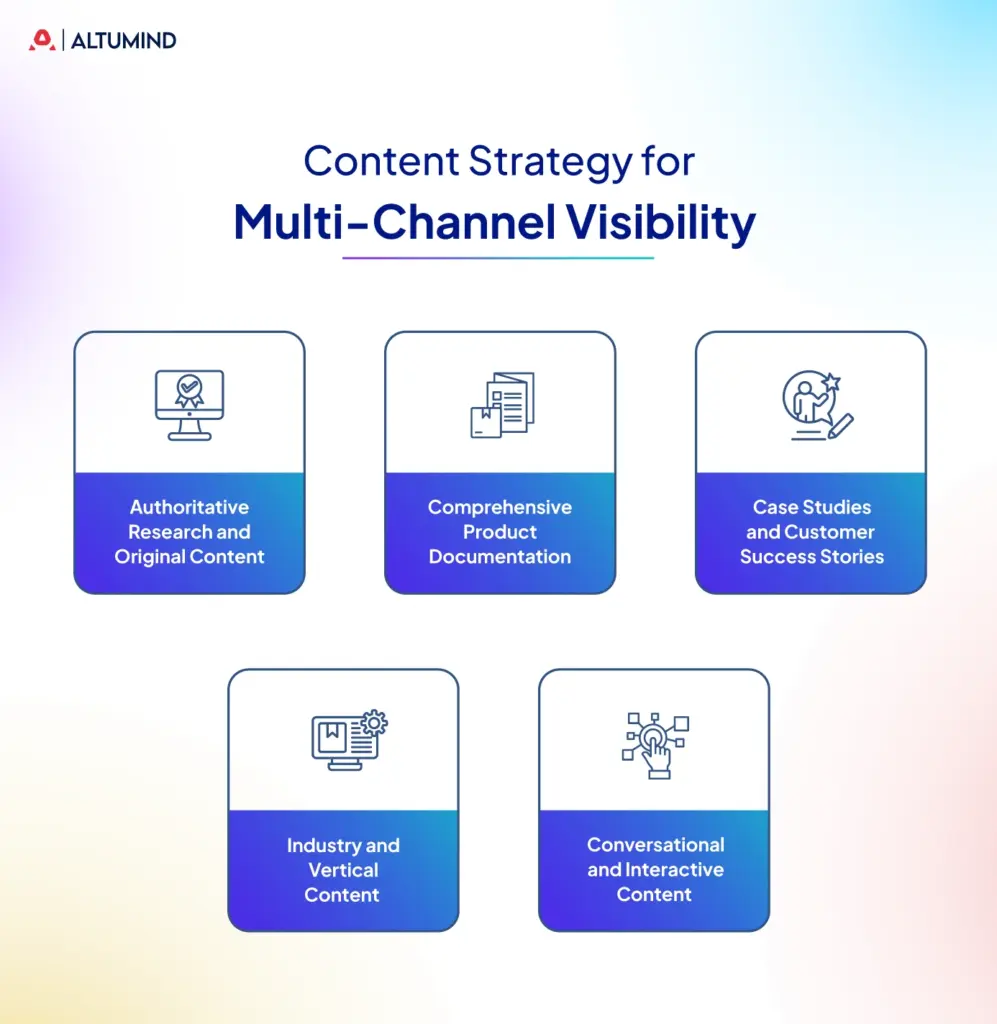
2026 search success requires a content strategy extending beyond blog posts to encompass multiple formats across channels.
1. Authoritative Research and Original Content
Enterprise brands establish visibility through original research, benchmark reports, and proprietary methodologies. This content becomes reference material AI systems cite when addressing relevant questions.
Original content requires investment but delivers disproportionate visibility return through cumulative referencing and authority building.
2. Comprehensive Product Documentation
Well-documented products with detailed guides, use-case examples, and integration documentation improve discoverability across channels. AI systems and buyers both benefit from comprehensive documentation enabling understanding without extensive research.
Quality documentation serves the dual purpose of supporting customers and improving discovery visibility.
3. Case Studies and Customer Success Stories
Real customer examples demonstrating value resonate across modern discovery channels. Case studies with specific metrics, implementation details, and customer context help AI systems understand solution impact and guide recommendations.
Customer stories provide credibility and relevance exceeding vendor claims.
4. Industry and Vertical Content
Creating content addressing specific industry challenges and opportunities positions enterprises as vertical authorities. This focused approach improves relevance for specialized discovery platforms and AI systems addressing vertical-specific queries.
Vertical content attracts customers during active research phases while establishing authority within target markets.
5. Conversational and Interactive Content
Modern search increasingly involves conversation. Interactive guides, assessment tools, and conversational content align with how customers research and evaluate solutions.
Interactive content provides engagement capturing customer interest while generating data revealing customer needs and priorities.
Strategic Integration with Digital Transformation
An enterprise search visibility strategy should integrate with broader digital transformation initiatives, ensuring consistent positioning across channels.
Organizations developing a digital transformation roadmap should incorporate a search visibility strategy addressing modern discovery behavior.
As enterprise environments become more complex, managed IT services help organizations maintain the secure, scalable, and reliable digital infrastructure needed to support modern customer experiences while building long-term visibility.
A search visibility strategy should reflect digital maturity and positioning for future capabilities. As organizations advance digitally, search positioning should communicate progress building market awareness of the transformation journey.
Measurement and Optimization
Modern search measurement differs from traditional metrics emphasizing rankings and traffic.
1. Visibility Across Channels
Track brand visibility across Google, AI assistants, specialized platforms, social channels, and industry communities. Comprehensive measurement reveals where your brand appears and where visibility gaps exist.
Visibility across channels improves the likelihood that enterprise buyers discover, evaluate, and shortlist your brand during key stages of the buying journey. Connect these insights to qualified pipeline contribution to understand which discovery channels influence meaningful business outcomes.
2. Customer Discovery Attribution
Understand which discovery channels influence purchasing decisions. Attribution modeling reveals which channels drive consideration and conversion, enabling intelligent resource allocation.
Modern attribution requires understanding customer journeys across multiple touchpoints rather than last-click attribution models.
3. Share of Voice
Monitor your share of buyer consideration across key discovery channels. This reflects how often your brand appears alongside relevant competitors during evaluation and purchasing decisions.
Tracking buyer consideration helps organizations identify competitive gaps, strengthen market positioning, and improve visibility where enterprise decisions are made.
4. Customer Satisfaction and Loyalty
Track how discovery experience influences customer satisfaction and loyalty. Customers discovering solutions aligned with actual needs express higher satisfaction than those mismatched.
Satisfaction metrics reveal whether modern discovery strategies effectively connect solutions with ideal customers.
Organizational Capabilities for Search Excellence
Building search excellence across the modern discovery landscape requires organizational capabilities extending beyond marketing.
1. Cross-Functional Alignment
Search success requires alignment between marketing, product, sales, and customer success teams. Each function influences how customers discover and perceive solutions.
Organizational structures should enable cross-functional collaboration rather than siloed team operation.
2. Data-Driven Decision Making
Modern search optimization depends on understanding customer behavior, discovery patterns, and competitive dynamics. Data-driven decision making replaces intuition-based positioning.
Invest in analytics capabilities revealing customer behavior and discovery patterns, enabling intelligent optimization.
3. Agile Optimization Approaches
Modern search landscape changes rapidly as algorithms evolve and customer behavior shifts. Agile optimization enabling rapid experimentation and adjustment serves better than rigid plans.
Organizational culture should embrace experimentation and continuous learning rather than fixed strategies.
Future-Proofing Search Strategy
Search behavior continues evolving beyond 2026. Organizations should build strategies adaptable to continued evolution.
1. Staying Ahead of Discovery Trends
Monitor emerging discovery channels, changing customer behaviors, and evolving search technologies.
Organizations should continuously evaluate emerging discovery channels and invest where there is clear alignment with customer behavior and business priorities.
2. Building Resilient Brand Positioning
Rather than optimizing for specific platforms or algorithms, build brands recognized for genuine authority and customer value. Resilient positioning survives platform changes and algorithm evolution.
Modern digital product development services account for evolving search behavior while building websites and applications for enterprise users.
3. Continuous Evolution and Learning
Search optimization requires continuous learning as the landscape evolves. Organizations should foster cultures valuing experimentation, learning, and adaptation.
Investment in continuous learning prevents obsolescence as the discovery landscape continues evolving beyond 2026.
Conclusion
Modern search behavior in 2026 differs fundamentally from traditional search models. Enterprise brands must now build visibility across conversational AI, specialized platforms, community channels, and voice interfaces alongside traditional search. Organizations that understand these evolving discovery patterns and maintain visibility across fragmented search ecosystems are better positioned to preserve competitive advantage.
Success requires treating search visibility as a strategic capability rather than a technical execution detail. Clear value positioning, authoritative content, and consistent presence across discovery channels enable visibility where customers actually research and purchase solutions.
Altumind helps enterprise brands develop comprehensive search strategies addressing 2026 reality. Our digital strategy services help organizations understand modern customer discovery behavior and develop integrated strategies for maintaining visibility across emerging search channels.
Ready to adapt your search strategy for modern buyer behavior? Connect with our team to develop comprehensive strategies maintaining enterprise brand visibility across all discovery channels where customers make decisions.
Table of Contents
- Introduction
- The Fundamental Shift in Enterprise Search Behavior
- Enterprise AI Search Visibility Strategy
- Understanding Modern B2B Search Journey
- Enterprise Brand Positioning for 2026 Search
- Content Strategy for Multi-Channel Visibility
- Strategic Integration with Digital Transformation
- Measurement and Optimization
- Organizational Capabilities for Search Excellence
- Future-Proofing Search Strategy
- Conclusion