AI Search Engine Optimization: How to Rank in AI Results in 2026
Strong Google rankings no longer guarantee visibility. AI platforms like ChatGPT, Perplexity, Claude, Gemini, and Google’s AI Overview answer queries directly, reducing website traffic. Traditional SEO focuses on rankings and clicks but overlooks how AI systems retrieve and cite content, which can put user attention and brand visibility at risk.
Ignoring AI search optimization creates clear challenges.
- Missing visibility in AI-generated answers used by millions daily.
- Losing brand mentions to competitors optimizing for AI platforms.
- Declining organic traffic from zero-click search experiences.
- Reduced lead generation from informational queries.
- Weakening authority as AI systems reference alternative sources.
To stay competitive, organizations must expand beyond traditional SEO. AI search optimization requires structuring content for clarity, credibility, and extractability while maintaining strong foundational SEO practices. Keep reading as we examine proven AI search engine optimization (SEO) techniques that will help you rank in AI results and top LLM models.
Understanding AI Search Engines
AI search engines use large language models to understand queries, retrieve relevant information, synthesize answers, and present results conversationally rather than displaying lists of links. These systems fundamentally change how users access information and how content gains visibility.
How AI Search Engines Work
AI-powered search platforms combine retrieval mechanisms with generative capabilities, creating comprehensive answers from multiple sources. When users ask questions, systems interpret intent, search knowledge bases or web content, evaluate source quality, synthesize information, and generate responses citing relevant sources.
Core mechanisms include the following:
- Query Understanding: Interpreting natural language questions, determining user intent, and identifying information needs.
- Information Retrieval: Searching indexed content, knowledge graphs, or real-time web data to find relevant sources.
- Source Evaluation: Assessing credibility, relevance, and authority to determine which information to include.
- Answer Synthesis: Combining information from multiple sources, creating comprehensive responses.
- Citation Generation: Attributing information to sources providing transparency and verification paths.
- Context Maintenance: Remembering conversation history, enabling multi-turn interactions.
Understanding these mechanisms helps content creators with how to optimize content for AI search engines.
Major AI Search Platforms
Several AI-powered platforms now serve significant user bases, changing information access patterns.
Leading platforms include the following:
- ChatGPT with Search: OpenAI’s conversational AI with web search integration answering queries using current information.
- Perplexity AI: Dedicated AI search engine providing sourced answers with citations and follow-up capabilities.
- Google Gemini: Google’s AI assistant integrating search capabilities within a conversational interface.
- Microsoft Copilot: Bing-powered AI search integrated across Microsoft products and services.
- Claude with Search: Anthropic’s AI assistant with web search, providing cited, current information.
- Meta AI: Facebook and Instagram integrated AI, answering questions across Meta platforms.
Each platform uses different retrieval mechanisms, ranking factors, and presentation formats requiring tailored optimization approaches.
How AI Search Engines Differ from Traditional SEO
While AI search optimization builds on traditional SEO foundations, fundamental differences in how systems retrieve, evaluate, and present content require expanded strategies beyond conventional approaches.
Content Discovery Mechanisms
Traditional search engines crawl websites following links and indexing pages. AI systems may access content through similar crawling, API integrations, licensing agreements, or real-time retrieval, creating different discovery dynamics.
Key differences include the following:
- Real-Time Retrieval: Some AI systems fetch current web content for each query rather than relying solely on pre-indexed databases.
- Multiple Data Sources: AI platforms combine web content, licensed databases, knowledge graphs, and training data.
- API Access: Structured data feeds through APIs may receive preferential treatment over crawled content.
- Content Partnerships: Direct relationships with publishers can influence content accessibility and citation likelihood.
- Freshness Prioritization: Recent content often receives preference for time-sensitive queries.
Understanding these mechanisms informs optimization strategies, ensuring content remains accessible through relevant channels.
Ranking and Selection Criteria
Google’s ranking factors emphasize backlinks, page authority, and technical optimization. AI systems prioritize different signals when selecting sources for citations and answer generation.
AI evaluation factors include:
- Content Clarity: Well-structured information that language models easily parse and understand.
- Factual Accuracy: Verifiable information from authoritative sources reducing hallucination risk.
- Citation Worthiness: Content quality, depth, and uniqueness make sources worth citing.
- Entity Recognition: Clear associations between brands, people, concepts, and expertise domains.
- Structured Data: Schema markup and semantic clarity helping models understand context and relationships.
- Authorship Signals: Demonstrated expertise through author credentials, bios, and publication history.
Traditional SEO metrics like backlinks matter less for AI citation, while content quality and clarity matter more.
User Experience and Intent
Traditional SEO optimizes for click-through to websites. AI search optimization accepts that users may never visit sites, focusing instead on brand visibility, thought leadership, and indirect conversion paths.
Experience differences include the following:
- Zero-Click Answers: Users get complete information without leaving AI platforms.
- Conversational Context: Multi-turn interactions build on previous questions, creating different information needs.
- Source Transparency: Citations and attributions matter more than organic result positioning.
- Information Synthesis: Users receive combined insights from multiple sources rather than evaluating sources individually.
- Follow-Up Queries: Successful optimization enables deeper engagement through suggested follow-ups.
This shift requires rethinking success metrics and conversion paths beyond website traffic alone. Understanding why users leave within seconds when they do visit from AI sources helps optimize the complete user journey.
Core Principles of AI Search Engine Optimization
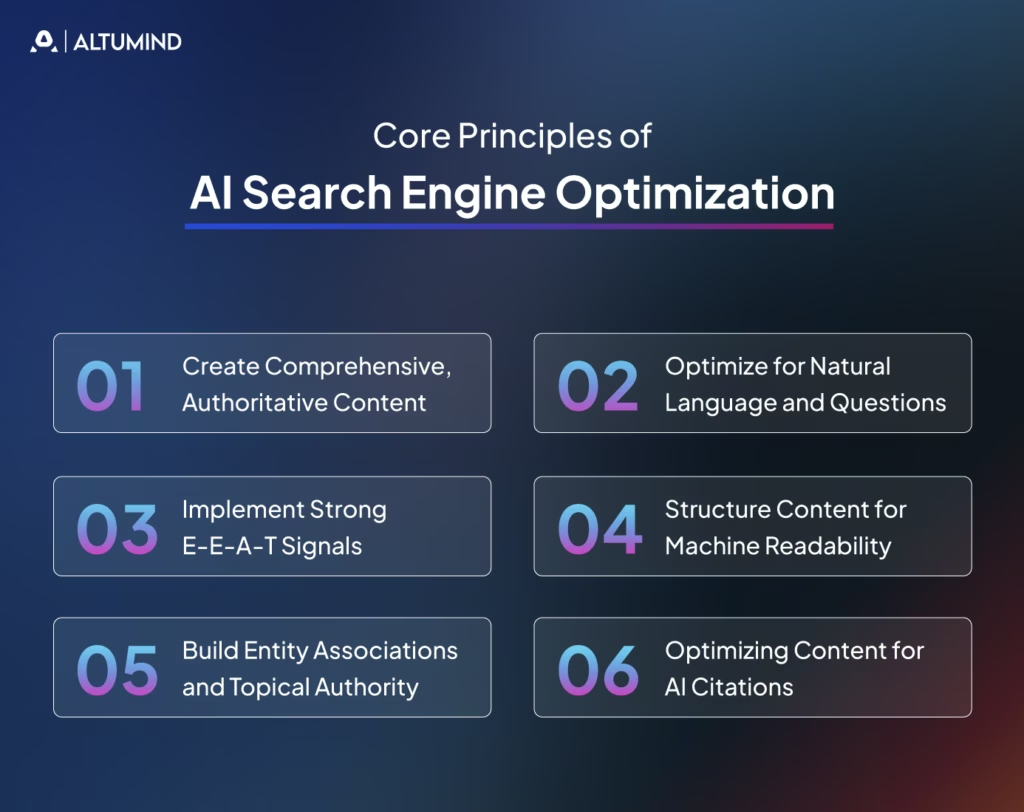
Effective AI SEO follows fundamental principles ensuring content remains discoverable, valuable, and citation-worthy across AI platforms while maintaining traditional search performance.
Create Comprehensive, Authoritative Content
AI systems favor detailed, well-researched content from authoritative sources over thin or promotional material. Depth and expertise matter more than keyword density.
Implementation strategies include:
- Topic Depth: Cover subjects comprehensively addressing multiple aspects, questions, and use cases.
- Expert Contributors: Feature subject matter experts with demonstrable credentials and experience.
- Original Research: Include proprietary data, case studies, or insights unavailable elsewhere.
- Multiple Perspectives: Present balanced viewpoints citing various expert opinions or approaches.
- Supporting Evidence: Provide data, examples, and citations supporting claims and recommendations.
- Regular Updates: Maintain content accuracy reflecting current information and evolving knowledge.
Comprehensive content increases citation likelihood while establishing topical authority, benefiting both AI and traditional search.
Optimize for Natural Language and Questions
Users interact with AI search engines conversationally using natural language questions rather than keyword phrases. Content should address these natural query patterns directly.
Optimization approaches include the following:
- Question-Based Headings: Structure content around common questions users ask about topics.
- Conversational Tone: Write naturally as if answering spoken questions rather than keyword-stuffed prose.
- Long-Tail Coverage: Address specific, detailed questions beyond broad topic overviews.
- Answer Formatting: Provide direct answers to questions before expanding with context and details.
- Related Questions: Anticipate follow-up queries addressing them within content.
- FAQ Sections: Include dedicated sections answering common questions concisely.
Natural language optimization serves both AI understanding and user readability, improving engagement across channels.
Implement Strong E-E-A-T Signals
Experience, Expertise, Authoritativeness, and Trustworthiness (EEAT) influence both Google rankings and AI citation decisions. Strong E-E-A-T signals increase content credibility and reference likelihood.
E-E-A-T optimization includes the following:
- Author Credentials: Display author bios highlighting relevant expertise, qualifications, and experience.
- About Pages: Create comprehensive organization descriptions establishing industry authority.
- Expert Quotes: Include attributed insights from recognized industry experts.
- Original Sources: Cite primary research, studies, and authoritative references supporting claims.
- Publication History: Maintain consistent, high-quality content demonstrating sustained expertise.
- Third-Party Recognition: Showcase awards, certifications, or industry acknowledgments.
- Transparent Methodology: Explain how research was conducted or conclusions were reached, demonstrating rigor.
E-E-A-T signals help AI systems distinguish authoritative content from unreliable sources, improving citation probability.
Structure Content for Machine Readability
AI systems parse and understand well-structured content more effectively than poorly organized information. Clear structure improves both discovery and accurate interpretation.
Structural optimization includes:
- Semantic HTML: Use proper heading hierarchies, lists, and semantic tags indicating content structure.
- Logical Organization: Present information in coherent sequences supporting progressive understanding.
- Clear Definitions: Define terms and concepts explicitly rather than assuming knowledge.
- Concise Summaries: Include executive summaries or key takeaways for quick comprehension.
- Visual Hierarchy: Use formatting to create scannable content with clear priority indicators.
- Data Tables: Present structured information in tables facilitating extraction and understanding.
- Schema Markup: Implement structured data, helping systems understand content types and relationships.
Well-structured content benefits human readers while enabling accurate AI interpretation and citation.
Build Entity Associations and Topical Authority
AI systems recognize entities like people, organizations, products, and concepts, understanding relationships between them. Strong entity associations establish topical authority, improving relevance for related queries.
Entity optimization strategies include:
- Consistent Branding: Maintain uniform brand mentions, names, and terminology across content.
- Entity Relationships: Explicitly connect your brand with relevant topics, technologies, or expertise areas.
- Knowledge Graph Presence: Ensure representation in knowledge bases like Wikipedia, Wikidata, or industry databases.
- Structured Mentions: Use schema markup identifying people, organizations, products, and relationships clearly.
- Topic Clustering: Create content hubs covering related topics comprehensively, establishing domain authority.
- Cross-Referencing: Link related content internally, showing topic interconnections and expertise breadth.
Entity recognition helps AI systems understand when your content or brand provides relevant expertise for specific queries.
Optimizing Content for AI Citations
Getting cited by AI search engines requires specific content characteristics beyond traditional SEO optimization. Citation-worthy content combines quality, clarity, uniqueness, and proper attribution.
1.Create Citable Content Formats
Certain content types receive citations more frequently than others based on information value and presentation clarity.
High-citation content formats include:
- Original Research: Studies, surveys, or experiments providing unique data unavailable elsewhere.
- Expert Guides: Comprehensive tutorials or how-to content demonstrating deep expertise.
- Data Compilations: Curated statistics, benchmarks, or industry data from authoritative sources.
- Case Studies: Detailed examples showing approaches, results, and lessons learned.
- Definitions and Glossaries: Clear explanations of terms, concepts, or industry terminology.
- Comparison Frameworks: Objective evaluations of options, approaches, or tools.
- Methodology Documentation: Detailed processes or frameworks others can reference or apply.
Focus content development on formats providing unique value worthy of citation and attribution.
2. Implement Clear Attribution and Sourcing
AI systems value content that properly attributes information to sources. Clear sourcing improves credibility while demonstrating research rigor.
Attribution best practices include:
- Cite Original Sources: Link to primary research, studies, or authoritative references supporting claims.
- Quote Attribution: Clearly identify sources for quoted material, including credentials.
- Data Transparency: Explain data sources, collection methods, and analysis approaches.
- Link to References: Provide clickable citations enabling verification of claims.
- Update Dates: Include publication and revision dates showing information currency.
- Author Identification: Clearly display content creators with relevant credentials.
Proper attribution establishes credibility while modeling behavior AI systems reward through citations.
3.Optimize for Answer Extraction
AI systems extract specific information from content, generating answers. Formatting content for easy extraction increases citation likelihood.
Extraction optimization includes the following:
- Direct Answers: Provide concise answers to questions before elaborating with context.
- Standalone Paragraphs: Ensure individual paragraphs make sense independently, supporting clean extraction.
- Bulleted Lists: Present steps, features, or key points in scannable list formats.
- Summary Sections: Include brief overviews or conclusions extractable as complete answers.
- Definition Boxes: Highlight key definitions or concepts for easy identification.
- Data Callouts: Emphasize statistics or findings through formatting, making them extraction-ready.
Content formatted for extraction serves both AI understanding and human readability, improving value across channels.
Technical Implementation Strategies
Technical optimization ensures AI systems can access, understand, and properly attribute your content. Implementation combines traditional technical SEO with AI-specific considerations.
Schema Markup and Structured Data
Structured data helps AI systems understand content types, relationships, and key information, enabling accurate interpretation and citation.
Critical schema types include:
- Article Schema: Identify content as articles with author, publish date, and headline information.
- Author Schema: Provide detailed author information, including credentials and expertise.
- Organization Schema: Establish entity recognition for your brand with comprehensive details.
- FAQ Schema: Mark question-answer pairs for enhanced discovery and extraction.
- How-To Schema: Structure instructional content with clear steps and materials.
- Review Schema: Identify product or service reviews with ratings and evaluation criteria.
- Breadcrumb Schema: Clarify site structure and content hierarchy.
Implement comprehensive schema markup across content types, improving machine understanding and rich result eligibility.
Content Accessibility and Crawlability
AI systems must access content reliably before they can cite it. Technical accessibility ensures content remains discoverable and retrievable.
Accessibility requirements include:
- Clean HTML: Use semantic markup without excessive JavaScript rendering barriers.
- Fast Loading: Optimize performance, ensuring quick content access for both users and AI systems.
- Mobile Optimization: Ensure a responsive design working across devices and screen sizes.
- Proper Indexing: Allow search engine crawling without blocking important content.
- XML Sitemaps: Maintain current sitemaps facilitating content discovery.
- Internal Linking: Create clear navigation paths to important content.
- HTTPS Security: Implement SSL certificates meeting security standards.
Technical optimization ensures AI systems can access and process your content without barriers.
API and Feed Availability
Some AI platforms may access content through APIs or structured feeds rather than web crawling. Providing alternative access methods can improve visibility.
API strategies include:
- RSS Feeds: Maintain updated feeds for blog content and news.
- JSON-LD: Embed structured data in JSON format for easy programmatic access.
- Content APIs: Consider providing API access for premium or partnership arrangements.
- Syndication: Distribute content through reputable platforms and aggregators.
- Platform Integration: Participate in publisher programs offered by AI providers.
Alternative access methods complement web presence, ensuring content reaches AI systems through multiple channels.
Measuring AI Search Performance
Tracking AI SEO success requires new metrics beyond traditional SEO analytics. Measurement combines brand monitoring, citation tracking, and indirect conversion attribution.
Citation and Brand Mention Tracking
Monitor how frequently AI systems cite or mention your brand, content, or expertise when answering relevant queries.
Tracking approaches include the following:
- Manual Query Testing: Regularly test relevant queries across AI platforms tracking brand mentions.
- Citation Monitoring: Search for your domain or brand within AI responses using systematic queries.
- Competitor Comparison: Track citation frequency relative to competitors for key topics.
- Query Coverage: Measure the breadth of questions where your content receives citations.
- Source Position: Note placement within multi-source answers indicating prominence.
- Attribution Quality: Evaluate how accurately AI systems represent your information.
Systematic citation tracking reveals optimization effectiveness and improvement opportunities.
Referral Traffic Analysis
While AI search reduces direct traffic, measure visits from AI platforms and conversational referrals.
Traffic analysis includes:
- Referrer Identification: Tag and track traffic from identified AI search platforms.
- Landing Page Performance: Analyze which content attracts AI-sourced visitors.
- Engagement Metrics: Measure how AI referrals interact compared to traditional search traffic.
- Conversion Tracking: Attribute conversions to AI-sourced visits, understanding business impact.
- Journey Mapping: Understand paths from AI discovery to website conversion.
Traffic analysis reveals indirect value even when a citation doesn’t drive immediate visits.
Brand Search and Awareness Metrics
AI citations influence brand awareness, potentially driving subsequent direct searches and offline conversations.
Awareness indicators include:
- Brand Search Volume: Track searches for your brand name across traditional search engines.
- Social Mentions: Monitor social media references following AI platform visibility.
- Direct Traffic: Measure increases in direct website visits, suggesting growing awareness.
- Survey Data: Conduct awareness surveys tracking brand recognition over time.
- Partnership Inquiries: Monitor business development contacts potentially influenced by AI visibility.
Awareness metrics capture indirect benefits beyond immediate traffic or citations.
How Can AI Search Engine Optimization Services Help You?
Organizations lacking internal expertise often engage specialized AI search engine optimization services, helping implement strategies, track performance, and maintain visibility across evolving AI platforms.
What AI SEO Services Provide
Professional AI search optimization services combine strategic planning, technical implementation, content optimization, and ongoing monitoring.
Service components include:
- AI Visibility Audit: Assessing current citation rates and brand mentions across AI platforms.
- Content Gap Analysis: Identifying topics where competitors receive citations but your brand doesn’t.
- Content Strategy Development: Planning content addressing AI citation opportunities.
- Technical Implementation: Deploying schema markup, structured data, and accessibility improvements.
- Content Optimization: Enhancing existing content for improved AI understanding and citation.
- Citation Monitoring: Tracking brand mentions and content references across AI platforms.
- Performance Reporting: Measuring progress and ROI from AI optimization efforts.
Comprehensive services address both technical and content dimensions of AI search optimization.
Selecting AI SEO Partners
Choosing effective AI search optimization partners requires evaluating expertise, methodologies, and alignment with business objectives.
Selection criteria include the following:
- Demonstrated Expertise: Proven experience with AI platform optimization beyond traditional SEO.
- Measurement Capabilities: Robust tracking and attribution methodologies for AI search performance.
- Content Quality Focus: Emphasis on quality and authority versus manipulation tactics.
- Technical Proficiency: Capability of implementing structured data and technical optimizations.
- Platform Knowledge: Understanding of multiple AI search platforms and their unique characteristics.
- Strategic Approach: Alignment with broader digital transformation roadmap and business objectives.
- Transparent Reporting: Clear communication of progress, challenges, and recommendations.
Effective partnerships combine technical expertise with strategic thinking, delivering sustainable visibility improvements.
Building Internal AI SEO Capabilities
Organizations may develop internal AI search optimization expertise through training, process development, and systematic learning.
Capability building includes:
- Team Education: Training content creators and SEO professionals on AI search optimization principles.
- Process Integration: Incorporating AI optimization into existing content development workflows.
- Tool Implementation: Deploying monitoring and tracking systems for AI search performance.
- Testing Frameworks: Establishing systematic query testing and citation tracking processes.
- Knowledge Sharing: Creating documentation and best practices for organizational learning.
- Continuous Learning: Staying current as AI platforms evolve and optimization strategies develop.
Internal capabilities provide sustainable advantages while maintaining control over strategic initiatives contributing to digital transformation success.
Conclusion
AI search optimization is now essential as conversational platforms redefine how users find information. It builds on traditional SEO while prioritizing clarity, structure, and citation readiness so AI systems can trust and reference your content.
Businesses that invest early gain stronger visibility, authority, and influence, even without direct clicks. Success shifts from traffic to mentions and citations, making it critical to align your strategy with how AI platforms evaluate and present information.
For organizations seeking comprehensive AI search optimization guidance, Altumind delivers strategic digital strategy services encompassing AI search visibility, content strategy, technical implementation, and performance measurement. Partner with us to build a future-ready strategy that drives measurable visibility, authority, and growth.