SaaS Product Development Roadmap for Scalable Business Growth in 2026
Your SaaS idea solves a real problem, but transforming concepts into revenue generating platforms requires more than good intentions. Most SaaS ventures fail not from lack of vision but from flawed execution, poor product-market fit, or technical foundations unable to scale.
Building successful cloud software demands systematic approaches balancing speed with quality, innovation with reliability, and user needs with business viability.
Inefficient SaaS product development practices can lead to significant business challenges, such as:
- Launching products nobody wants due to insufficient market validation.
- Burning through capital on features users never adopt or value.
- Building technical architectures that struggle to scale under growth.
- Introducing security vulnerabilities that risk exposing customer data and eroding user trust.
- Accumulating technical debt that makes iteration difficult and costly to maintain.
The solution requires following proven SaaS product development processes rather than improvising approaches based on assumptions. Strategic frameworks guide teams through validation, design, development, launch, and scaling phases while systematically reducing risk at each stage. In this blog, we’ll understand the SaaS product development process.
Understanding SaaS Product Development
SaaS product development encompasses the complete journey from initial concept through launched, scaled cloud software serving customers reliably. Unlike traditional software delivered through downloads or installations, SaaS-based product development creates applications accessed through browsers or APIs, hosted centrally, updated continuously, and monetized through recurring subscriptions.
What Makes SaaS Development Different
SaaS products require different architectural decisions, business models, and development approaches than traditional software. Multi-tenancy means single application instances serve multiple customers simultaneously while maintaining data isolation and customization.
Continuous delivery replaces periodic releases with frequent updates deployed without customer involvement. Subscription economics shift focus from one-time sales to retention, expansion, and lifetime value maximization.
Technical requirements include:
- Scalable Architecture: Systems must handle growth from dozens to millions of users without complete rebuilds.
- Security and Compliance: Protecting customer data across shared infrastructure while meeting regulatory requirements.
- High Availability: Users expect 24/7 access with minimal downtime or performance degradation.
- Multi-Tenancy: Efficiently serving many customers from shared resources while maintaining isolation.
- API-First Design: Enabling integrations, mobile apps, and ecosystem expansion.
- Performance Optimization: Delivering responsive experiences despite network latency and shared resources.
Business model differences affect development priorities. Traditional software optimizes for feature completeness before sale, while SaaS emphasizes rapid value delivery, user onboarding smoothness, and continuous enhancement based on usage data. The SaaS product development process must balance speed to market with quality, releasing minimum viable products and then iterating based on customer feedback and behavioral analytics.
Essential SaaS Product Characteristics
Successful SaaS products share common characteristics regardless of industry or use case. These foundational qualities separate platforms users adopt enthusiastically from those struggling to gain traction.
Core characteristics include the following:
- Accessibility: Available anywhere with internet connectivity across devices and platforms.
- Automatic Updates: Improvements deploy continuously without user action or disruption.
- Predictable Costs: Subscription pricing creates budget certainty versus large upfront investments.
- Scalability: Accommodates growth in users, data, and transactions without performance degradation.
- Integration Capability: Connects with other tools through APIs and standard protocols.
- Data Security: Protects customer information through encryption, access controls, and compliance.
- Reliability: Maintains high uptime with rapid recovery from any failures.
Understanding how to develop a SaaS product requires recognizing these characteristics must be embedded from inception rather than added later. Architectural decisions made early determine whether these qualities emerge naturally or require expensive retrofitting.
The Complete SaaS Product Development Process
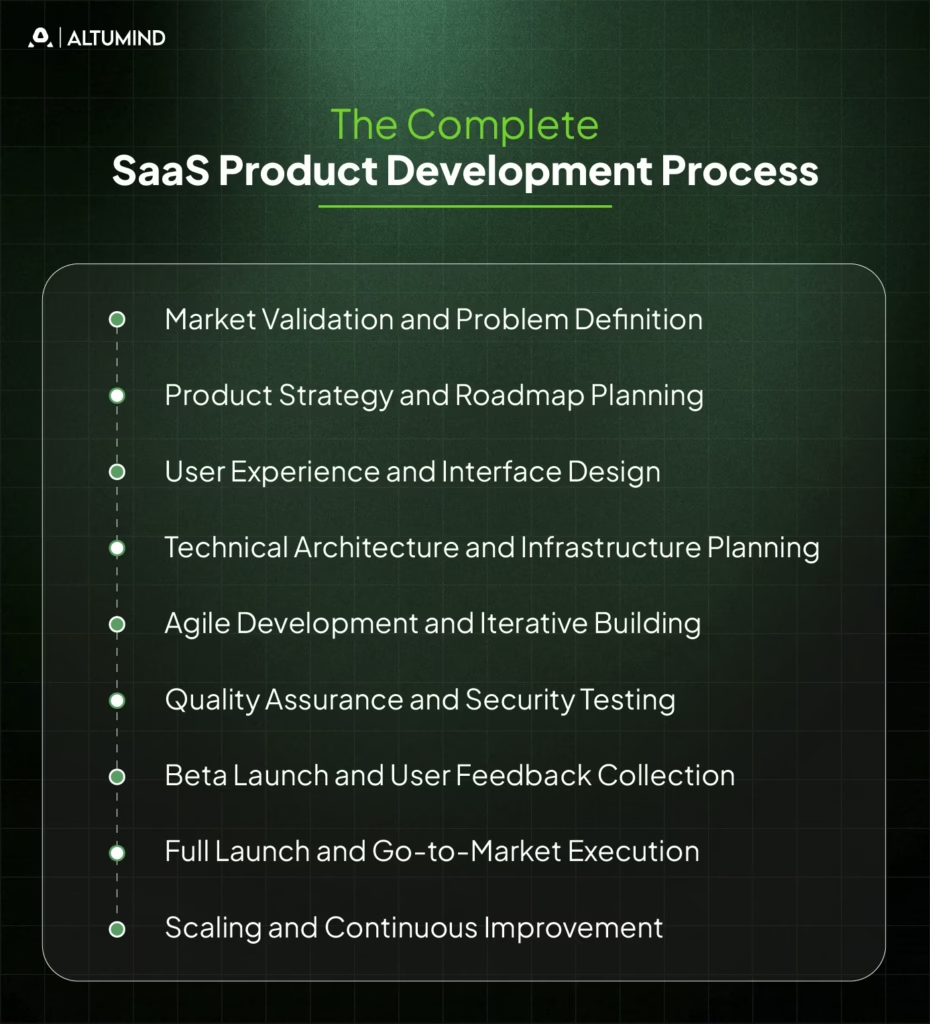
Systematic SaaS product development processes guide teams through stages from initial concept through scaled products serving thousands of customers. Each phase serves specific purposes with distinct activities, decisions, and success criteria.
Phase 1: Market Validation and Problem Definition
SaaS product development begins with validating that real problems exist worth solving and that sufficient customers will pay for solutions. Many products fail because they solve problems nobody has or address markets too small to sustain businesses.
Validation activities include:
- Customer Discovery Interviews: Speaking directly with potential users, understanding their workflows, pain points, and current solutions.
- Market Research: Quantifying addressable markets, analyzing competitors, and identifying positioning opportunities.
- Problem Prioritization: Determining which problems create sufficient urgency and value to justify new products.
- Willingness to Pay Assessment: Testing whether customers will actually pay prices supporting viable unit economics.
- Jobs to Be Done Analysis: Understanding what users hire products to accomplish beyond surface feature requests.
Successful validation produces clear problem statements, defined target customers, competitive differentiation hypotheses, and initial pricing frameworks. Teams should be able to articulate precisely whose problems they solve, why current solutions fail, and how proposed products create measurable value. Understanding digital product development for business leaders provides additional context for strategic product planning.
Phase 2: Product Strategy and Roadmap Planning
Product strategy translates validated problems into concrete product visions, feature prioritization, and phased delivery plans. Strategic planning prevents building everything simultaneously by focusing on minimum viable products and delivering core value quickly.
Strategy development includes:
- Vision Definition: Articulating long-term product aspirations and market positioning.
- Value Proposition Design: Defining specific benefits users receive and how they differ from alternatives.
- Feature Prioritization: Ranking capabilities by user value and development effort using frameworks like RICE or Kano.
- MVP Scope Definition: Identifying minimum feature sets enabling users to accomplish core jobs.
- Roadmap Creation: Planning feature releases across quarters, balancing quick wins with strategic capabilities.
- Success Metrics: Establishing KPIs measuring product performance and user value delivery.
Strong product strategies focus on solving specific problems exceptionally well rather than attempting broad feature parity with established competitors. They identify unfair advantages, whether through technology, distribution, positioning, or user experience, enabling competitive differentiation.
Phase 3: User Experience and Interface Design
User experience design determines whether users adopt products enthusiastically or abandon them in frustration. The SaaS product development process must invest significantly in UX before coding, creating experiences users find intuitive, efficient, and pleasant.
Design activities include:
- User Research: Understanding user mental models, workflows, and preferences through interviews and observation.
- Information Architecture: Organizing features and content into logical structures supporting user goals.
- Wireframing: Creating low-fidelity layouts showing screen structures and navigation flows.
- Prototyping: Building interactive mockups enabling user testing before development.
- Visual Design: Applying brand identity through colors, typography, and interface elements.
- Usability Testing: Watching users attempt tasks,
identifying confusion and friction points. - Design System Creation: Building reusable components, ensuring consistency and accelerating development.
Great SaaS design balances simplicity with power, making common tasks effortless while supporting advanced capabilities for expert users. Designs should feel familiar, leveraging established patterns while differentiating through thoughtful innovations addressing specific user needs.
Phase 4: Technical Architecture and Infrastructure Planning
Architecture decisions made early constrain possibilities throughout product lifetimes. How to develop a SaaS product technically requires choosing foundational technologies, data models, and infrastructure approaches supporting current needs while enabling future scale.
Architecture planning addresses:
- Technology Stack Selection: Choosing programming languages, frameworks, and platforms based on team expertise and requirements.
- Database Design: Selecting data storage approaches balancing performance, scalability, and complexity.
- Multi-Tenancy Strategy: Determining how to isolate customer data while sharing application instances.
- Cloud Platform Selection: Evaluating AWS, Azure, Google Cloud, or other infrastructure providers.
- Security Architecture: Planning authentication, authorization, encryption, and compliance requirements.
- Integration Approach: Designing API strategies enabling third-party connectivity and ecosystem expansion.
- Scalability Planning: Ensuring architectures accommodate 10x or 100x growth without complete rebuilds.
Modern SaaS architectures typically embrace cloud-native approaches using microservices, containers, serverless functions, and managed services. These patterns provide flexibility and scalability while reducing operational burden compared to traditional monolithic applications.
Phase 5: Agile Development and Iterative Building
Development transforms designs and architectures into working software through systematic coding, testing, and integration. SaaS-based product development favors agile methodologies, enabling rapid iteration, continuous feedback, and incremental delivery over waterfall approaches.
Development practices include:
- Sprint Planning: Organizing work into 2-week cycles with defined goals and deliverables.
- Daily Standups: Brief team synchronizations maintaining alignment and identifying blockers.
- Test-Driven Development: Writing automated tests before code, ensuring quality and enabling confident refactoring.
- Continuous Integration: Automatically building and testing code with every change, catching issues immediately.
- Code Review: Peer examination of changes before merging, maintaining quality and sharing knowledge.
- Technical Debt Management: Balancing feature velocity with code quality and maintainability.
- Documentation: Creating technical and user documentation enabling support and knowledge transfer.
Agile development delivers working software every sprint, enabling stakeholder feedback and course correction. This iterative approach reduces risk by validating assumptions continuously rather than discovering problems only after months of development.
Phase 6: Quality Assurance and Security Testing
Quality assurance ensures products work correctly, perform acceptably, and protect user data before launch. Testing validates functionality, usability, performance, and security across scenarios.
Testing activities include:
- Functional Testing: Verifying features work as specified across browsers and devices.
- Integration Testing: Confirming components work together properly and data flows correctly.
- Performance Testing: Measuring response times, throughput, and behavior under load.
- Security Testing: Identifying vulnerabilities through penetration testing and code analysis.
- Usability Testing: Watching real users attempt tasks, identifying confusion and friction.
- Accessibility Testing: Ensuring products work for users with disabilities meeting WCAG standards.
- Regression Testing: Automated validation that changes don’t break existing functionality.
Comprehensive testing catches issues before users encounter them, preventing reputation damage and support burden. Security testing deserves particular attention given that SaaS products handle sensitive customer data across shared infrastructure.
Phase 7: Beta Launch and User Feedback Collection
Beta launches focus on releasing products to limited user groups, enabling real-world validation before full availability. Early adopters provide invaluable feedback identifying issues and opportunities missed during internal testing.
Beta activities include:
- Beta User Recruitment: Finding customers willing to test early versions and provide honest feedback.
- Onboarding Optimization: Refining signup flows and initial experiences based on user behavior.
- Feature Validation: Confirming capabilities deliver expected value and work as intended.
- Performance Monitoring: Tracking system behavior under real usage and identifying bottlenecks.
- Support Process Testing: Validating helps resources and support channels work effectively.
- Feedback Collection: Systematically gathering user input through surveys, interviews, and analytics.
- Iterative Improvement: Rapidly addressing issues and incorporating learnings before broader launch.
Beta phases provide confidence that products deliver value and work reliably before investing in marketing and sales. They reveal gaps between intended and actual user behavior, enabling course correction.
Phase 8: Full Launch and Go-to-Market Execution
Launch transitional products from beta to general availability with marketing, sales enablement, and support infrastructure activated. Successful launches generate awareness, drive adoption, and establish market presence.
Launch activities include:
- Marketing Campaign Activation: Executing content marketing, paid advertising, PR, and social media.
- Sales Enablement: Training sales teams, creating collateral, and establishing processes.
- Support Readiness: Ensuring help documentation, chatbots, and support teams can handle inquiries.
- Performance Monitoring: Watching system behavior, user adoption, and business metrics closely.
- Onboarding Optimization: Continuously refining new user experiences based on conversion data.
- Feedback Loops: Maintaining channels for user input and feature requests.
- Iteration Planning: Using early usage data to prioritize enhancements and fixes.
Launches are beginnings rather than endings. Initial releases establish foundations while real product development continues based on customer usage, feedback, and market evolution.
Phase 9: Scaling and Continuous Improvement
Scaling ensures products handle growth in users, data, and transactions while maintaining performance and reliability. Continuous improvement means constantly enhancing value based on usage insights and competitive dynamics.
Scaling activities include the following:
- Infrastructure Optimization: Tuning configurations, adding capacity, and implementing caching.
- Performance Monitoring: Tracking response times, error rates, and resource utilization.
- Feature Development: Building capabilities addressing user needs and competitive positioning.
- Technical Debt Reduction: Refactoring code, improving maintainability, and enabling faster iteration.
- Security Enhancement: Implementing new protections as threats evolve.
- Integration Expansion: Adding connections to popular platforms users request.
- Analytics Deepening: Gaining richer insights into usage patterns and value delivery.
Successful SaaS companies treat products as living platforms requiring ongoing investment rather than finished projects. Markets evolve, competitors innovate, and user expectations advance, demanding continuous enhancement to maintain relevance and competitiveness.
Building Your SaaS Development Team
Successful SaaS product development requires multidisciplinary teams combining product strategy, user experience design, engineering, and go-to-market capabilities. Team composition affects execution speed, quality, and ability to iterate based on learning.
Essential Team Roles and Skills
Complete SaaS teams include diverse specialists contributing unique expertise throughout development lifecycles.
Core roles include:
- Product Manager: Defines vision, prioritizes features, and ensures development aligns with market needs.
- UX Designer: Creates user experiences balancing usability with business objectives.
- Frontend Developer: Builds user interfaces implementing designs across browsers and devices.
- Backend Developer: Creates server logic, databases, and business rules powering applications.
- DevOps Engineer: Manages infrastructure, deployment, monitoring, and operational reliability.
- QA Specialist: Tests functionality, performance, and security, ensuring quality.
- Security Engineer: Implements protections and validates compliance with security standards.
Small teams often combine roles with individuals wearing multiple hats. As products and organizations scale, specialization increases with dedicated specialists for each discipline.
In-House vs. Outsourced Development
Organizations face build-or-buy decisions regarding development capabilities. In-house teams provide control and domain knowledge accumulation while outsourcing offers flexibility and access to specialized expertise.
In-house advantages include:
- Deep product and business knowledge accumulation over time.
- Direct alignment with company culture and objectives.
- Easier communication and coordination without vendor management.
- Retention of intellectual property and technical capabilities.
- Long-term cost efficiency for sustained development.
Outsourcing benefits include the following:
- Faster initial capability ramp without hiring and training delays.
- Access to specialized expertise unavailable internally.
- Flexibility to scale capacity up or down based on needs.
- Reduced overhead from HR, benefits, and facility costs.
- Fresh perspectives from teams working across multiple products.
Many successful approaches combine both, maintaining core product and architecture capabilities in-house while outsourcing specialized needs like design, mobile development, or testing. Mitigating risk at every stage of the product development lifecycle requires appropriate team composition and capability planning.
Common SaaS Development Challenges
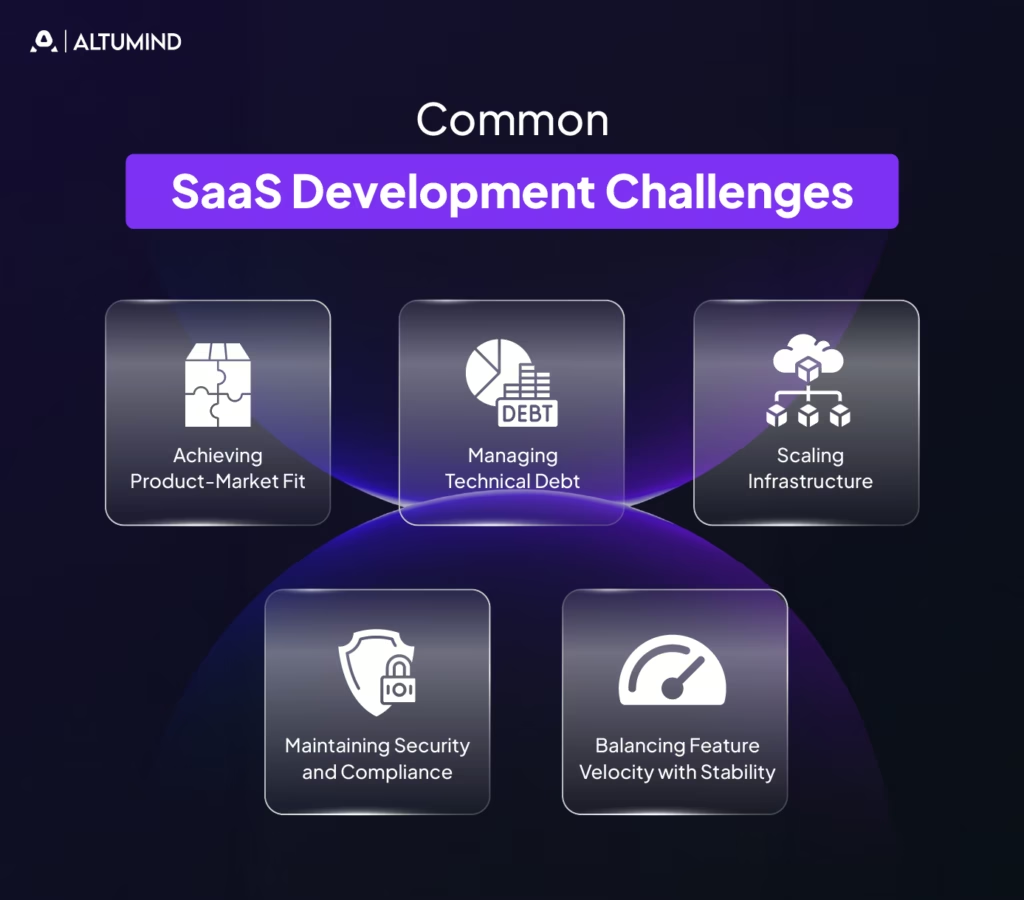
Even well-planned SaaS product development encounters obstacles. Understanding common challenges enables proactive mitigation, reducing delays and quality issues.
1: Achieving Product-Market Fit
Many SaaS products fail because they solve problems inadequately or address markets too small to sustain businesses. Product-market fit represents the match between product capabilities and strong market demand.
Solutions include:
- Continuous Customer Development: Maintaining regular user conversations throughout development.
- Rapid Iteration: Releasing early, gathering feedback, and improving quickly rather than perfecting before launch.
- Usage Analytics: Tracking which features drive value and engagement versus those ignored.
- Cohort Analysis: Understanding how user behavior and retention evolve over time.
- Willingness to Pivot: Changing direction based on evidence rather than commitment to initial vision.
Product-market fit manifests through organic growth, strong retention, enthusiastic user feedback, and difficulty keeping up with demand. Its absence shows through high churn, low engagement, and dependence on expensive acquisition.
2: Managing Technical Debt
Speed to market creates tension with code quality. Shortcuts accelerate initial delivery but accumulate technical debt slowing future development and increasing bugs.
Solutions include:
- Code Review Discipline: Maintaining quality standards even under deadline pressure.
- Automated Testing: Preventing regressions, enabling confident refactoring.
- Regular Refactoring: Allocating time each sprint for quality improvements.
- Architecture Reviews: Periodically validating designs remain appropriate as products evolve.
- Documentation Standards: Ensuring code remains understandable as teams grow and change.
Some technical debt proves strategic, enabling faster market learning. The key is deliberate decision-making about which shortcuts make sense versus unintentional quality degradation.
3: Scaling Infrastructure
Growth poses technical challenges as systems designed for hundreds of users struggle supporting thousands or millions. Scalability issues damage reputation and slow growth.
Solutions include:
- Performance Monitoring: Tracking metrics and identifying bottlenecks before they cause failures.
- Load Testing: Simulating growth scenarios and validating capacity before real traffic increases.
- Incremental Optimization: Continuously improving efficiency rather than waiting for crises.
- Cloud Auto-Scaling: Leveraging platform capabilities to automatically adjust capacity.
- Architecture Evolution: Migrating from monoliths to microservices as complexity justifies it.
Successful scaling combines technology with process. Monitoring provides early warning while disciplined optimization and capacity planning prevent emergencies.
4: Maintaining Security and Compliance
Security threats evolve continuously while compliance requirements become more stringent. Breaches destroy trust and create legal liability, making vigilance essential.
Solutions include:
- Security Training: Educating teams about threats and secure coding practices.
- Regular Audits: Periodic security reviews and penetration testing.
- Automated Scanning: Tools identifying vulnerabilities in code and dependencies.
- Incident Response Planning: Procedures for detecting and responding to breaches.
- Compliance Frameworks: Implementing controls meeting SOC 2, ISO 27001, or industry requirements.
Security requires ongoing investment rather than one-time implementation. Threats evolve, demanding continuous enhancement of protections and monitoring.
5: Balancing Feature Velocity with Stability
Users want both rapid innovation and reliable software. Aggressive feature development risks introducing bugs while excessive caution slows competitiveness.
Solutions include:
- Feature Flags: Deploying code while controlling feature visibility, enabling gradual rollouts.
- Automated Testing: Catching regressions before deployment, maintaining stability despite rapid change.
- Staged Rollouts: Releasing to small user percentages first, detecting issues before broad exposure.
- Rollback Procedures: Enabling quick reversion when problems appear.
- Quality Metrics: Tracking error rates and performance, ensuring standards are maintained despite velocity.
Balancing speed and stability requires discipline and tooling. Teams embracing DevOps practices and continuous delivery achieved this through automation and systematic risk management.
Conclusion
Successful SaaS product development requires systematic approaches balancing speed with quality, user needs with business viability, and innovation with reliability. Understanding how to develop a SaaS product extends beyond technical implementation to encompass market validation, user experience excellence, architecture decisions, and business model design.
For organizations seeking expert guidance on SaaS product development, Altumind AI delivers comprehensive digital product development services combining strategic thinking, technical excellence, and proven delivery methodologies.
Our teams guide clients through complete development lifecycles from concept validation through launched, scaled SaaS platforms. Contact our team to discuss your SaaS vision and discover how systematic development approaches transform ideas into sustainable competitive advantages.